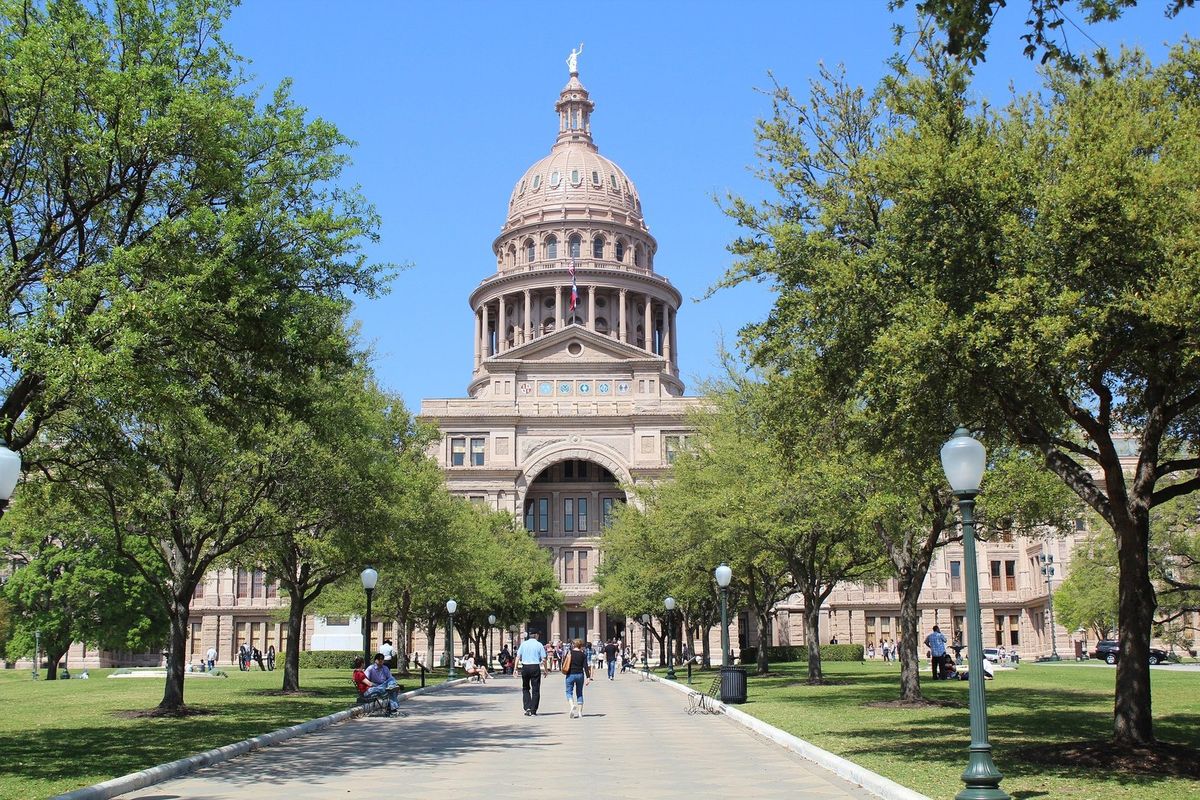
Texas community colleges: what international students need
Texas has 50 public community college districts. Here is what we can say, from the colleges' own pages, about applying to them from abroad.
Study Community College USA editorial · Published 10 November 2026
Texas has 50 public community college districts[6], and we cover one of them in detail: Austin Community College (ACC). Apply there on an F-1 visa and you'll pay the out-of-state and international rate. In the out-of-district column of the tuition table, that's $419 per credit hour[3]. Below, we walk through what that means for you and what to check at the other Texas colleges on your list.
How many community colleges does Texas have?
Fifty community college districts[6]. One district can run several campuses, so you'll find more places to sit a class than that number suggests. Each district sets its own international rules, deadlines and prices. That's why a general "Texas" answer only goes so far.
What does Austin Community College ask of F-1 applicants?
ACC wants official TOEFL or IELTS scores: a TOEFL iBT overall score of 79 or an IELTS Academic overall band of 6.5. It doesn't accept Duolingo or other English exams[1]. If Duolingo is your only test, start with our page on colleges that accept Duolingo.
Two more rules matter early. ACC doesn't admit F-1 students to certificate-only programs[1]. It also takes no new or transfer F-1 students for summer, though you can co-enroll[2]. The good news: ACC has waived the application fee for international applicants for now[1].
What are the ACC deadlines?
| Term | New F-1 students | Transfer F-1 students | Required arrival |
|---|---|---|---|
| Fall | July 1 | July 15 | August 1 |
| Spring | October 15 | November 15 | January 2 |
| Summer | not accepted | not accepted | n/a |
ACC's international students page[2] prints no year on these dates. Today is November 10, 2026. The spring date for new students has passed, and the transfer date is five days away. Email the International Student Office before you count on either.
What does ACC cost an international student?
If you don't qualify for Texas resident tuition, ACC charges you the Out-of-State & International (Out-of-District) rate[4]. For 12 credit hours that's $5,028 a term, and the in-district column for out-of-state and international students shows $2,616[3]. F visas are on ACC's list of visas that may not qualify for resident tuition, unless you meet the residency determinations[4].
Your visa paperwork uses a bigger number. ACC estimates $30,000 a year: $13,000 for tuition and fees, $17,000 for living costs, plus $5,000 for each dependent[5]. By our arithmetic, two terms of 12 hours at the table rate come to $10,056. So the $13,000 estimate leaves room for course fees and other charges. ACC doesn't itemise the gap, so ask.
The money has to be liquid. ACC accepts a bank certification or a recent bank statement, and it doesn't accept investment or salary statements[5]. Don't count on federal aid either: an F-1 visa on its own doesn't make you eligible[9].
How do Houston and Dallas differ?
We don't list these two in the directory, so read this as a pointer, not a review. Houston Community College gives first-time F-1 applicants three dates: June 15 for fall, October 15 for spring and March 15 for summer[7]. It requires 12 credit hours in fall and spring, allows only one fully online class, and enrolls F-1 students in its health plan automatically[7]. So HCC takes summer starts where ACC doesn't.
Dallas College lists your deadlines on your acceptance letter and I-20. Allow 15 business days for the I-20 once your file is complete[8].
What this means for you
Start with your start term. A summer start rules ACC out for a new F-1 student and keeps Houston open[2][7]. Next, check your English test against the college's own score, not a general "Texas" figure. Last, work out the yearly cost from that college's table and compare it with the amount you'd have to show.
Plan the visa step for after admission. A designated school official at the college issues your Form I-20. You need it to apply for the F-1 visa, and you bring the original to the interview[10]. The visa can be issued up to 365 days before your start date[10], so there's no reason to rush a deposit before you've seen the I-20.
Put the same four questions to each Texas college in writing: your start term's deadline, the exact score it accepts, the per-credit rate for F-1 students, and the full-time credit minimum.
Next step
Read our page on Austin Community College to see its programs. Then use costs and the F-1 visa guide to plan your budget and your visa. The linked pages are in English.
Your next step starts here.
Ask about U.S. community college programs, university transfer or your next study step. A question is optional.
Sources
- Austin Community College: International Student Application Requirements
- Austin Community College: International Students
- Austin Community College: Tuition table
- Austin Community College: Tuition Information for International Students
- Austin Community College: Proof of Financial Support
- Texas Comptroller of Public Accounts: Texas community colleges (Economic data)
- Houston Community College: First-Time F-1 International Student Admissions
- Dallas College: Admission Steps for F-1 International Students
- U.S. Department of Education, Federal Student Aid: U.S. Citizenship and Eligible Noncitizens, FSA Handbook 2025-2026
- Study in the States, U.S. Department of Homeland Security: Students and the Form I-20
Read next
 Colleges & states ·
Associate in Science: what the Florida name means for you
"Associate in Science" is the Florida spelling of a two-year degree. At Valencia it is built mainly for a job; at Austin the same kind of degree is built for transfer. Colleges & states ·
Best community colleges in Texas: what 'best' means for you
Texas has 50 community college districts and no official ranking among them. Here's how to choose, with the entry rules and costs of the one Texas college in this directory. Colleges & states ·